Local context
Mosquitoes and the mangrove island
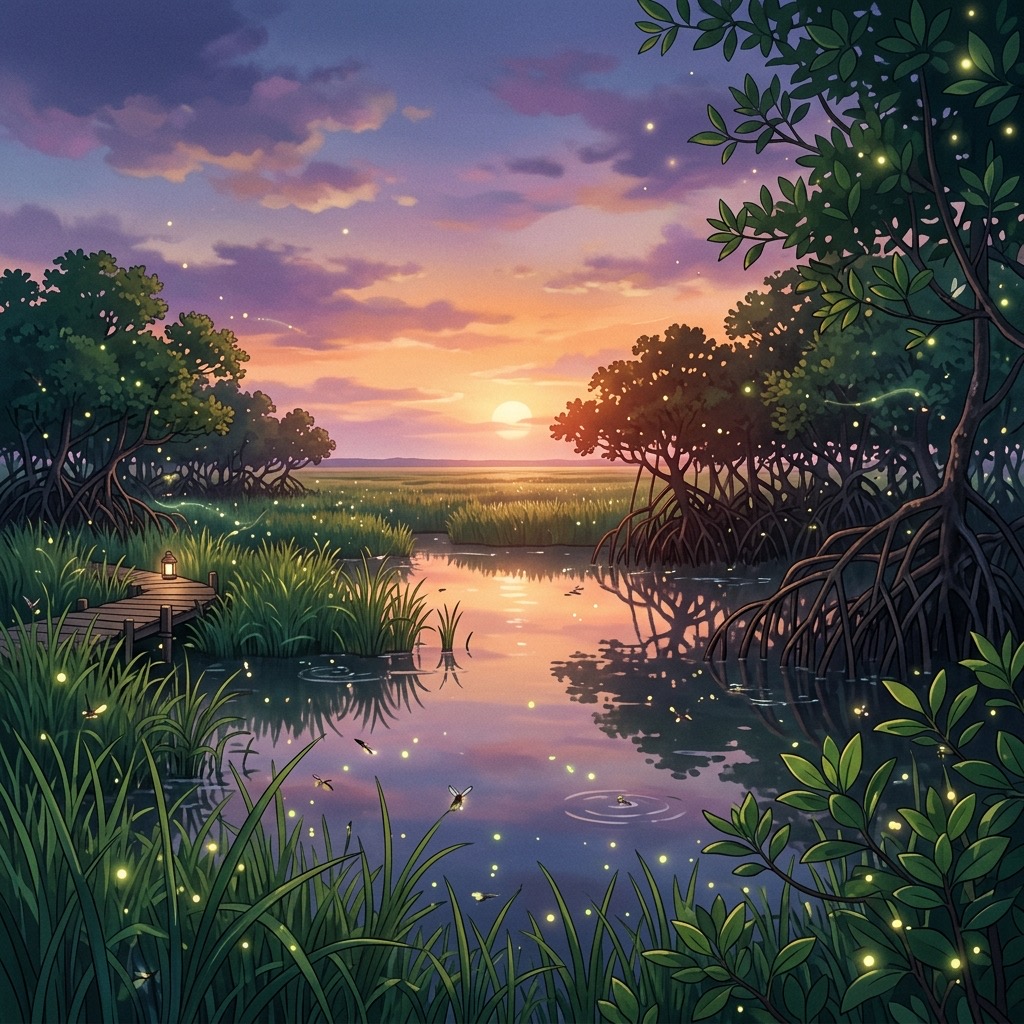
The name Punta Mosquito is not a charming coincidence. It is a geographic warning. That western tip of the island, where flamingos feed on shallow sandbars, is surrounded by dense mangrove forest and standing water: the ideal breeding habitat for mosquitoes to reproduce by the millions. The fishermen who first mapped this coast named it with precision.
The town center, by contrast, benefits from the sea breeze that crosses the island from north to south. That constant airflow keeps most insects at bay during daylight hours, particularly along the beach strip and the first few streets inland. Locals organize their lives around this fact: sunsets are enjoyed on the beach, where the wind still blows, not in the interior courtyards where the air stagnates. At outdoor restaurants, it is common to see citronella coils burning under the tables from six o'clock onward.
The real test for any visitor is the bioluminescence kayak tour. The route threads through mangrove channels where the breeze cannot penetrate and mosquitoes rule without competition. Guides warn everyone in advance and carry extra repellent, but the stretch between the open lagoon and the interior channels is a forceful reminder that Holbox is, above all, a mangrove island. The reward of watching the water glow blue-green with every paddle stroke makes the bites worthwhile, but you need to arrive prepared or you will spend the next three days scratching.
Understanding which species you are dealing with matters. Holbox hosts two primary mosquito groups. Aedes aegypti, the daytime-biting species responsible for transmitting dengue, chikungunya, and Zika, breeds in small containers of standing water: flower pots, discarded tires, water tanks, even bottle caps. It is an urban mosquito that thrives in and around the village. Culex species, which bite primarily at dusk and nighttime, breed in the larger standing water bodies found throughout the mangrove system. Both are present year-round, but their population density fluctuates dramatically with rainfall and temperature.
Seasonal patterns
Mosquito levels by season
December through March -- very low. Cold fronts (nortes) from the Gulf of Mexico drop temperatures, reduce humidity, and bring sustained winds that suppress mosquito activity. Rainfall is minimal, drying up breeding sites. Many evenings you can dine outdoors without applying any repellent at all. This is the most comfortable period for travelers who are particularly sensitive to bites.
April through May -- low to moderate. Temperatures begin climbing and mosquito activity increases, though rainfall remains infrequent enough to limit breeding. Repellent becomes advisable at sunset, especially on interior streets away from the beach breeze. Mornings and midday remain largely bite-free if you are near the water.
June through August -- high. Heat, humidity, and frequent afternoon rain create optimal breeding conditions. Puddles form in the sandy streets and persist for hours. Mangrove breeding sites reach maximum capacity. DEET or picaridin repellent is essential from late afternoon through the night, and long sleeves at dusk are not overkill. The bioluminescence tours during this period require serious preparation: cover exposed skin, apply repellent liberally, and accept that some bites are inevitable in the mangrove channels.
September through October -- very high (peak). This is the worst period. Maximum rainfall (5.1 inches / 130 mm per month) and sustained temperatures above 86 F (30 C) produce the highest mosquito density of the year. Standing water is everywhere. If you visit during these months, treat repellent application as non-negotiable: DEET 20 to 30 percent or picaridin 20 percent, reapplied every four to six hours. Consider permethrin-treated clothing if you plan to spend time in mangrove areas or on evening tours.
November -- moderate, dropping fast. Rainfall decreases and the first nortes of the season bring cooler, drier air. Within a few weeks, mosquito populations drop significantly. By late November, conditions approach the comfortable levels of the dry season.
Health considerations
Dengue risk and repellent recommendations
Quintana Roo, the Mexican state that includes Holbox, is classified as a high-risk zone for dengue fever. The Aedes aegypti mosquito that transmits dengue is present on the island year-round, with transmission risk peaking during the rainy season (June through October). Chikungunya and Zika are also transmitted by the same species, though cases are less common.
For travelers spending a few days on the island and using proper protection, the statistical risk of contracting a mosquito-borne illness is low but not zero. The CDC recommends DEET-based repellents at 20 to 30 percent concentration for tropical destinations with dengue risk. This provides four to six hours of protection per application. Picaridin (also called icaridin) at 20 percent is an equally effective alternative that does not damage synthetic fabrics or plastics, unlike DEET.
Natural repellents based on citronella, lemon eucalyptus, or neem oil provide 30 to 60 minutes of protection under tropical conditions. This is inadequate for Holbox, particularly during evening hours when exposure is highest. If you prefer to minimize chemical exposure, oil of lemon eucalyptus (OLE, not to be confused with lemon eucalyptus essential oil) is the strongest plant-derived option, providing roughly two hours of protection, but it still falls short of DEET or picaridin in high-density environments like mangrove channels.
What to pack: A DEET 25-30% or picaridin 20% repellent (spray format is easiest), a backup travel-size bottle, lightweight long-sleeve shirts and long pants for evening wear, and if you plan to do the bioluminescence kayak tour, consider a head net and permethrin-treated clothing. Mosquito coils and plug-in repellent devices are available at the small shops in town but selection is limited and prices are marked up. Bring your preferred products from home.
Common myths
Myths vs. reality
“There are no mosquitoes on the beach.”
The beach with an active breeze does have fewer mosquitoes during the day. But at sunset, when the wind drops, even the sand strip gets visitors. Mangrove edges and interior village streets have mosquitoes year-round regardless of time. The breeze is your ally, not a guarantee. If you are sitting on the beach at golden hour and the air goes still, you have about ten minutes before the first bites arrive.
“Regular drugstore repellent is enough for summer.”
In tropical mangrove environments, natural repellents based on citronella or eucalyptus are inadequate. The WHO recommends DEET at 20 to 30 percent or picaridin at 20 percent for areas with dengue risk, and Quintana Roo qualifies. These compounds provide four to six hours of protection; natural alternatives barely cover 30 to 60 minutes under tropical conditions. The difference is not subtle. It is the difference between a comfortable evening and waking up with forty bites on your ankles.
“Mosquitoes are just annoying, not dangerous.”
Quintana Roo is a high-risk zone for dengue fever. The Aedes aegypti mosquito, present on Holbox, also transmits chikungunya and Zika. The risk for a tourist visiting for a few days with proper protection is low but not zero. Dengue symptoms include high fever, severe headache, pain behind the eyes, and joint pain, appearing 4 to 10 days after the bite. Preventing bites is not just about comfort. It is a genuine health measure.
“Punta Mosquito has mosquitoes, but the rest of the island is fine.”
Mosquitoes are present wherever mangrove grows, and mangrove lines nearly the entire perimeter of the island. Punta Mosquito has the highest density, but the edges of town, interior paths, and any area near dense vegetation also harbor them, especially at dusk. The entire island is mosquito territory; Punta Mosquito is merely the epicenter. Even the Holbox town pier, surrounded by mangrove on the lagoon side, can be surprisingly mosquito-heavy on calm evenings.
Frequently asked questions
What people ask
Are there many mosquitoes in Holbox?
More than most Caribbean destinations. Mangroves breed them. On the beach with breeze they're barely noticeable; near mangroves at dusk in summer, they're bad.
When are there the fewest mosquitoes?
December to March. Norte winds (40–60 km/h) eliminate flying insects and rain is minimal.
What repellent should I use?
DEET 20–30% or Picaridin 20%. Natural citronella repellents are insufficient for tropical mangrove zones.
Is there a dengue risk?
Yes, Quintana Roo is a high-risk state. Use DEET repellent, wear long sleeves at dusk, and use mosquito nets in accommodations without screens.
Does the bioluminescence tour have mosquitoes?
Yes. The nighttime tour crosses mangrove areas. Apply repellent beforehand and wear long sleeves.
Next step