Geographic advantage
Why Holbox gets far less sargassum than Tulum or Playa del Carmen
The single most important fact about sargassum and Holbox is geography. The island sits on the northern tip of the Yucatan Peninsula, facing the Gulf of Mexico rather than the open Caribbean. The massive rafts of pelagic sargassum (Sargassum natans and Sargassum fluitans) that have plagued Caribbean coastlines since 2011 travel westward on the North Equatorial Current and slam into the east-facing shores of Quintana Roo: Tulum, Playa del Carmen, Puerto Morelos, and Mahahual. Holbox, protected by the peninsula itself, sits on the wrong side for sargassum to reach it in bulk.
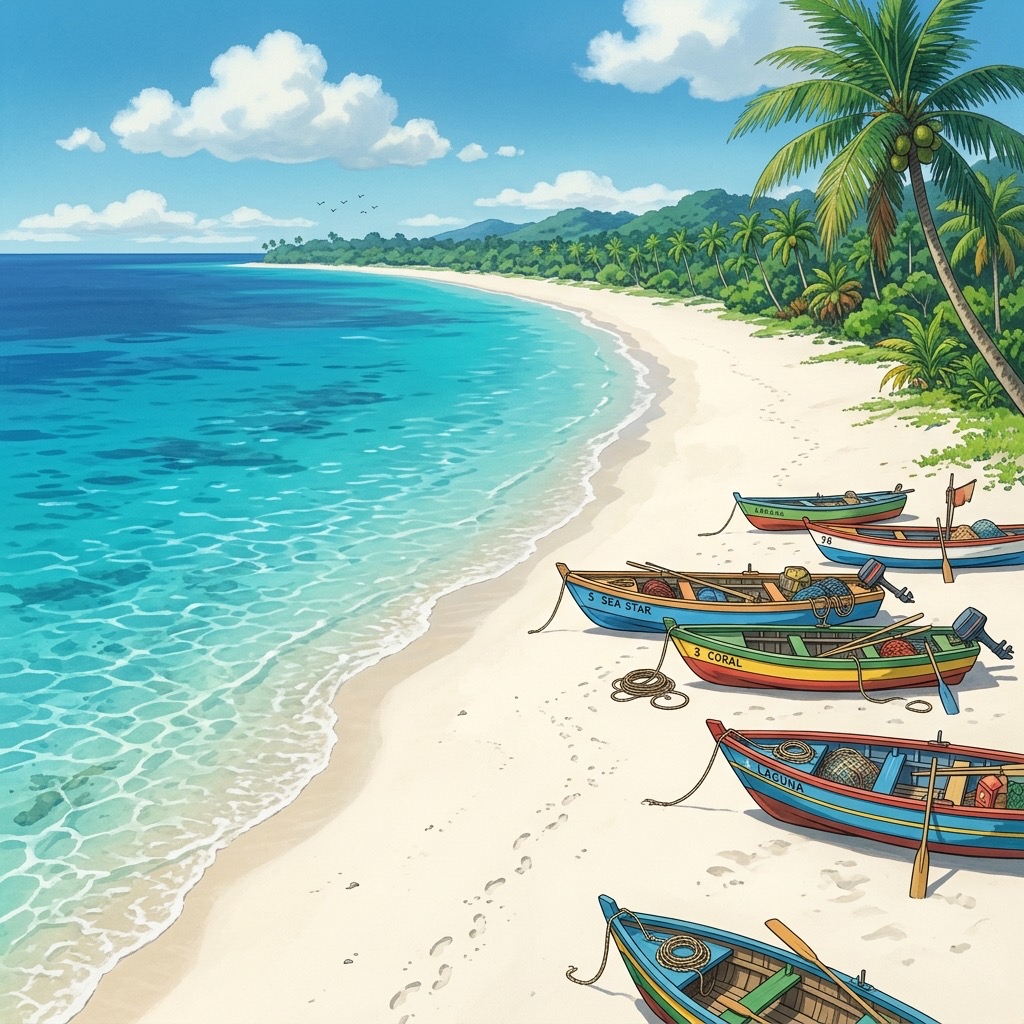
The ferry crossing from Chiquila offers the first evidence. If the water on the 30-minute ride is green-turquoise without brown floating mats, you already know the island is clear. The Holbox pier faces the interior lagoon and almost never accumulates sargassum. Playa Norte, the main beach with its hammocks strung between palms and knee-deep turquoise water extending 100 yards from shore, is the first area that would show any arrival. In practice, significant accumulation here is rare.
Punta Mosquito, the sandbar at the western tip of the island where flamingos wade in ankle-deep water, is one of the most sheltered zones. During low tide, the sandbars extend hundreds of yards into the shallows without a trace of brown algae. Locals are quick to distinguish sargassum from seagrass: "If it doesn't smell, it's turtlegrass from the bottom," as one fisherman at the Chiquila dock put it. That distinction matters enormously because many first-time visitors see any green material washing ashore and assume the worst.
UNAM's Laboratory for Satellite Observation (LANOT) monitors sargassum distribution across the Mexican Caribbean and Gulf using Sentinel-2 satellite imagery. Their weekly reports consistently classify Holbox as a low-impact zone. The satellite data is publicly available and updated regularly, making it possible to check conditions before booking a trip. The contrast with Caribbean-facing beaches, which frequently register "high" or "very high" sargassum levels from May through September, is stark.
Seagrass vs. sargassum
The material on the beach is probably not sargassum
Holbox is surrounded by extensive beds of turtlegrass (Thalassia testudinum), a rooted marine plant that grows on the sandy seafloor and is a vital part of the coastal ecosystem. Wind and currents regularly tear up fragments and deposit them on the beach. This seagrass is flat-bladed, dark green to brown, and has no smell when fresh. It looks nothing like sargassum up close, but from a distance, a band of seagrass wrack on the shoreline can trigger alarm in travelers who have been reading Caribbean sargassum horror stories.
Sargassum, by contrast, is a free-floating brown alga with small berry-like air bladders (pneumatocysts) that keep it buoyant. When it washes ashore and decomposes, it releases hydrogen sulfide gas, producing a distinctive rotten-egg smell that is impossible to miss. Fresh sargassum is golden-brown; decomposing sargassum turns black and slimy. If the material on the beach is green, flat, and odorless, it is almost certainly seagrass, and it means the ecosystem around Holbox is healthy.
Hotels and beach clubs in Holbox rake the seagrass off the sand each morning as part of routine maintenance. This is not sargassum cleanup. It is the same thing beach resorts everywhere do with natural organic debris. The seagrass wrack actually provides nutrients for the beach ecosystem and stabilizes sand, but guests prefer a clean aesthetic, so the raking continues.
Month-by-month risk
Sargassum risk calendar for Holbox
January through April -- very low risk. Gulf currents keep Holbox virtually sargassum-free. Beaches are clean, water is crystal clear, and this is the period with the highest guarantee of pristine shoreline conditions. If sargassum is your primary concern, book during these months and stop worrying.
May through June -- low to moderate risk. Peak sargassum season begins in the open Caribbean, but Holbox barely registers it. Some seagrass wrack may wash up (and get mistaken for sargassum by nervous visitors), but actual brown algae accumulation is uncommon. The difference between Holbox and Tulum during these months can be dramatic: hours of sargassum-free beach versus ankle-deep mats.
July through August -- moderate risk. This is the window with the highest probability of seeing some floating sargassum near Holbox, coinciding with the Caribbean-wide peak. Even so, levels remain low compared to the eastern Quintana Roo coast, where accumulations can exceed three feet of thickness. A few patches may drift in on certain current patterns and disappear within a day or two.
September through October -- decreasing risk. The Caribbean sargassum season winds down and overall algal activity drops across the region. Holbox returns to low-impact conditions. The nortes that begin arriving in October help disperse any lingering material.
November through December -- very low risk. Sargassum activity is minimal or absent. Winter nortes push surface water and debris offshore, and the beaches maintain their clean, natural state without any intervention needed.
Common myths
Myths vs. reality
“Holbox has the same sargassum problem as Tulum and Playa del Carmen.”
Holbox faces the Gulf of Mexico, not the open Caribbean. The massive sargassum rafts follow Caribbean currents and strike the east-facing coastline of Quintana Roo. UNAM's LANOT satellite monitoring consistently classifies Holbox as a low-impact zone. During months when Tulum beaches are buried under three feet of brown algae, Holbox often has none at all.
“That stuff on the beach is sargassum.”
Holbox has extensive beds of turtlegrass (Thalassia testudinum) growing on the seafloor. Wind and currents deposit fragments on the shore regularly. Unlike sargassum, turtlegrass is flat-bladed, dark green, and does not produce the foul rotten-egg smell of decomposing sargassum. The local rule is simple: if it does not smell, it is seagrass, and its presence means the marine ecosystem is healthy.
“Sargassum in Holbox is a new and unsolvable crisis.”
Holbox has historically experienced low sargassum impact. Furthermore, UNAM's LANOT uses Sentinel-2 satellite imagery to forecast arrivals up to five days in advance, allowing local operators to take preventive measures. The monitoring system covers the entire Mexican coastline and data is publicly accessible, so you can check conditions before your trip rather than relying on outdated social media posts.
“The Mexican Navy cleans sargassum from Holbox regularly.”
SEMAR's (Mexican Navy) Operacion Sargazo does not include Holbox in its operational zones. The reason is positive: sargassum impact is so low that permanent cleanup operations are not justified. SEMAR's three active zones are Cancun-Puerto Morelos, Playa del Carmen-Tulum, and Mahahual-Xcalak, all on the Caribbean-facing coast where the problem is orders of magnitude worse.
Frequently asked questions
What people ask
Is there sargassum in Holbox?
Holbox is one of the least affected beaches in Quintana Roo thanks to its Gulf of Mexico position. UNAM satellite monitoring confirms low impact even during peak season (May–August).
When is there the least sargassum?
January to April and November to December. Even during peak season (July–August), Holbox usually has clean beaches.
What's the difference between sargassum and seagrass?
Sargassum is brown algae that smells strongly when decomposing. Seagrass (Thalassia testudinum) grows on the seabed and doesn't smell.
How can I check sargassum conditions before traveling?
The most reliable monitoring is LANOT-UNAM (lanot.unam.mx), updating Sentinel-2 satellite images every 5 days.
Does seagrass affect swimming?
Not significantly. In shallow waters like Playa Norte or Punta Mosquito, the bottom is clear and visible in calm conditions.
Next step